
Greek Wetlands
Greece possesses an exceptionally rich wetland heritage, with 2,226 recorded wetlands covering a total of 2,486.72 square kilometers. Of these, 1,340 are natural, representing approximately 79% of the country’s total wetland area.
Natural coastal wetlands—such as deltas, lagoons, estuaries, and coastal marshes—account for the largest percentage (50.41%) of the total area. Natural inland wetlands, which include marshes and small or large lakes, cover 28.47%, while artificial wetlands, such as reservoirs and mine ponds, account for 21.12%.
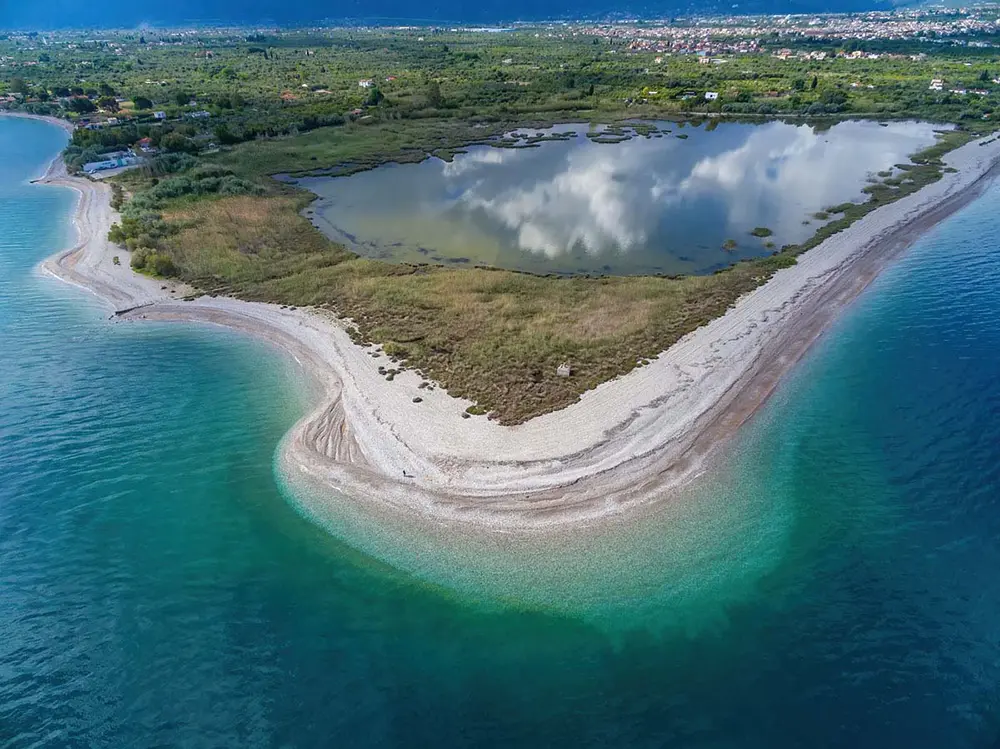
Geographically, 1,400 wetlands are located in mainland Greece, while 826 are found in the island regions.
Despite their ecological value, the majority of Greek wetlands remain outside the protection regime.
SOURCES:
National Museum of Natural History Goulandris / Greek Biotope-Wetland Centre (EKBY). Geospatial Data. 2019. Cartographic representation of wetland boundaries in mainland Greece (version 13.1)
WWF Greece. (2013). Ygtotopio islands – Database of the Greek island wetlands
Website of Greek wetlands
Fitoka E., M. Tompoulidou, L. Hatziiordanou, and A. Apostolakis. 2020. Wetlands of continental Greece: number, area, spatial distribution. The Goulandris Natural History Museum / Greek Biotope – Wetland Centre. 78p. Thermi.
National Information System for Biodiversity in Greece: Indicator “A.4 Area of Greek wetlands”
Important Bird Areas (IBAs)
Important Bird Areas (IBAs) are an internationally recognized network of sites dedicated to the conservation of globally threatened bird species, endemic bird species, or bird species that depend on specific habitats for their survival.
Their goal is to provide safe areas for breeding, wintering, and migration. These areas are identified based on standardised scientific criteria.
In Greece, 208 Important Bird Areas have been identified, covering a total of 42,853.55 square kilometers. Of these:
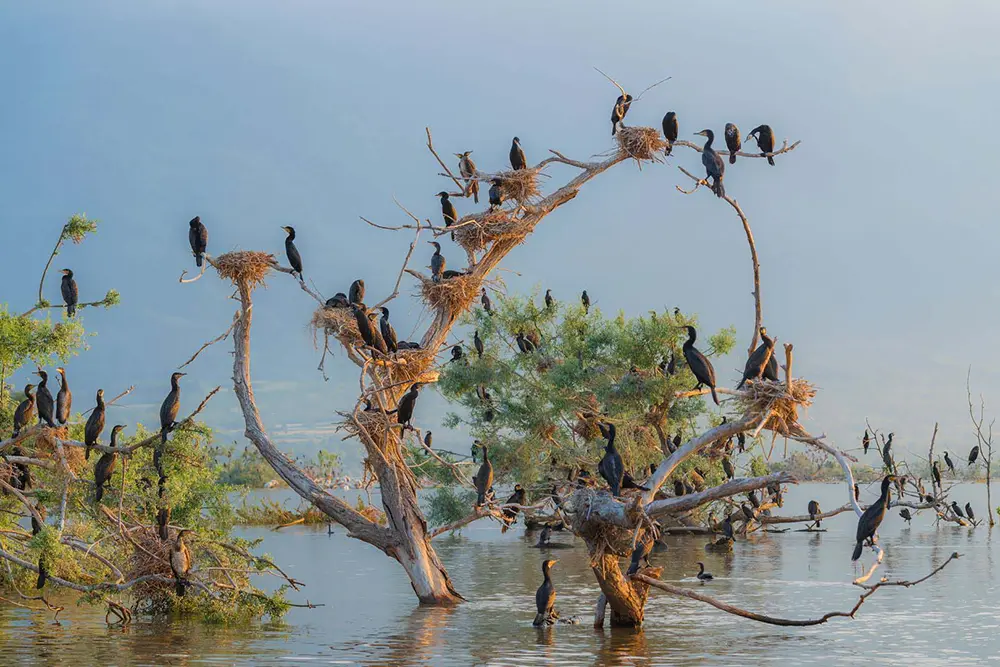
- 31,479.42 square kilometers are located on land, corresponding to 23.86% of the country’s total area.
- 11,374.13 square kilometers are marine areas.
Key Biodiversity Areas
Key Biodiversity Areas (KBAs) are sites of global importance for nature conservation, identified based on internationally accepted, quantitative criteria established by IUCN. Their goal is to protect species and ecosystems that are critical for the conservation of global biodiversity.
In Greece, 204 Key Biodiversity Areas have been identified, which were designated based on bird species by the Hellenic Ornithological Society.
In total, these areas cover 41,904.12 square kilometers. Of these:
31,412.85 square kilometers are located on land, corresponding to 23.81% of the country’s total area.
10,491.27 square kilometers are marine areas.
SOURCES:
BirdLife International (2024). Key Biodiversity Area digital boundaries. September 2024 Version. Derived from the World Database of Key Biodiversity Areas. Developed by the KBA Partnership (BirdLife International, International Union for the Conservation of Nature, Amphibian Survival Alliance, Conservation International, Critical Ecosystem Partnership Fund, Global Environment Facility, Re:wild, NatureServe, Rainforest Trust, Royal Society for the Protection of Birds, Wildlife Conservation Society, and World Wildlife Fund)
National Information System on Biodiversity in Greece
